Blockchain & Wallet Solutions

Custom Crypto Wallet Development for Your Business

Build a crypto wallet experience around your product, users, and supported blockchain networks. Codexxa develops tailored wallet applications with asset management, transaction functionality, and security-focused architecture to meet your business requirements.
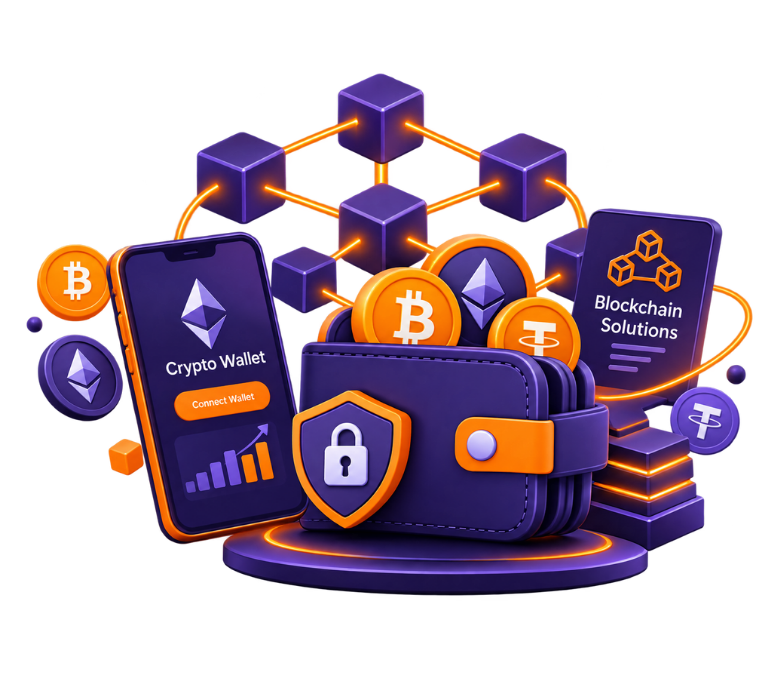
Tailored wallet architecture built around your business requirements
Blockchain and Wallet Solutions

Plan Your Crypto Wallet Development Project

Discuss your wallet concept, blockchain requirements, and essential features with our development team.

Services

Crypto Wallet Development Services

Choose a development approach that fits your product, preferred wallet model, and technical requirements.

01

Custom Crypto Wallet Development

Build a wallet application around your intended user experience, supported digital assets, network requirements, and business workflows.

Explore Service
02

Mobile Crypto Wallet Development

Develop wallet experiences for mobile users, with intuitive asset views, transaction actions, and device-appropriate navigation.

Explore Service
03

Web Wallet Development

Create browser-accessible wallet interfaces that connect users with supported blockchain functionality and account features.

Explore Service
04

Wallet Integration and Modernization

Extend an existing application with wallet connectivity, blockchain services, or updated transaction workflows to meet evolving requirements.

Explore Service
Wallet Functionality

Choose the Right Crypto Wallet Functionality

Wallet architecture determines how users access assets, manage credentials, and authorize transactions. We help define the model and features around your product requirements.

Custodial Wallets

Design wallet experiences where private-key custody and related operations are managed by the designated custodian. The architecture must account for access permissions, operational controls, and applicable responsibilities.

Non-Custodial Wallets

Develop wallets that allow users to control their private keys or recovery credentials, with signing and access flows designed around the selected implementation.

Multi-Asset Wallet Support

Present supported digital assets in one interface, with balances, asset details, and network-specific information where available.

Essential Wallet Features

  • Wallet creation and account access.
  • Sending and receiving supported assets.
  • Transaction history and status visibility.
  • Network and asset selection.
  • Address display and QR-code support.
  • Backup and recovery workflows appropriate to the wallet model.
Blockchain & Security

Connect Your Wallet With Blockchain Networks

A crypto wallet needs reliable communication with its supported networks and careful handling of the credentials used to authorize transactions.

Blockchain Network Integration

Connect wallet functionality with selected blockchain networks through suitable nodes, APIs, or development libraries. Network compatibility and supported assets are defined during technical planning.

Private-Key and Credential Management

Design key-generation, storage, access, and recovery mechanisms according to the chosen custodial or non-custodial model. Sensitive credentials require safeguards appropriate to the architecture and threat model.

Transaction Signing and Validation

Build transaction flows that present relevant details for authorization, apply appropriate validation checks, and communicate transaction status to the wallet interface.

Access Controls and Security Testing

Assess authentication, permissions, dependencies, and transaction-related risks through appropriate testing before deployment. Security measures should reflect the wallet design, integrations, and intended use.

Process

From Wallet Planning to Deployment

A defined development process helps align blockchain functionality, wallet security, and user experience from the beginning.

01

Discovery and Requirements

Define the target users, wallet model, supported networks, digital assets, essential features, and integration needs.

02

Architecture and Interface Design

Plan the wallet structure, network connectivity, credential handling, transaction flows, and user interface.

03

Development and Testing

Implement agreed functionality and test wallet access, transaction signing, network responses, error handling, and recovery flows within the project scope.

04

Deployment and Ongoing Support

Prepare the application for release, configure the required services, and plan updates, monitoring, and maintenance according to your needs.

FAQ

Crypto Wallet Development FAQs

What is crypto wallet development? +

Crypto wallet development involves creating software that lets users manage supported digital assets and interact with blockchain networks. Depending on the design, features may include wallet creation, address management, transaction signing, asset visibility, and recovery options.

Can Codexxa develop a custom crypto wallet? +

Yes. Codexxa can develop a wallet application around your product requirements, selected wallet model, supported networks, and required features. The project scope is defined according to technical feasibility and integration needs.

What is the difference between custodial and non-custodial wallets? +

In a custodial wallet, a designated service or custodian manages private-key custody. In a non-custodial wallet, users retain control of their keys or signing credentials. Each model requires a different approach to access, recovery, and security.

Which blockchain networks can a crypto wallet support? +

Network support depends on your requirements and the available technical integrations. Compatibility, supported assets, transaction formats, network fees, and testing requirements should be assessed for each selected blockchain.

How is security addressed in crypto wallet development? +

Security planning may include protected key handling, access controls, secure communication, transaction validation, dependency reviews, and security testing. The appropriate measures depend on the wallet model and its architecture. No implementation can guarantee complete protection against every threat.

How long does it take to develop a crypto wallet? +

Timelines depend on the wallet type, number of supported networks, feature complexity, integrations, and security-testing requirements. A more reliable estimate can be prepared after the requirements and technical scope have been reviewed.

Turn Your Crypto Wallet Concept Into a Working Product

Share your product goals with Codexxa and plan a wallet solution around your users, networks, and functionality.

Technology

Crypto Wallet Development Tools & Technologies

JavaScript
TypeScript
React
React Native
Node.js
Python
Solidity (where smart contracts are required)
Web3.js
Ethers.js
Blockchain Node and RPC APIs
WalletConnect
PostgreSQL
AWS
Microsoft Azure

Codexxa Support

We typically reply within minutes

Hey! πŸ‘‹ Are you looking for something? I can help you β€” just fill your details here.