Bring related services, transactions, and digital experiences into one application built around your business model. Codexxa helps plan and develop custom super apps with modular functionality, connected user journeys, and integrations shaped by your users and operational needs.
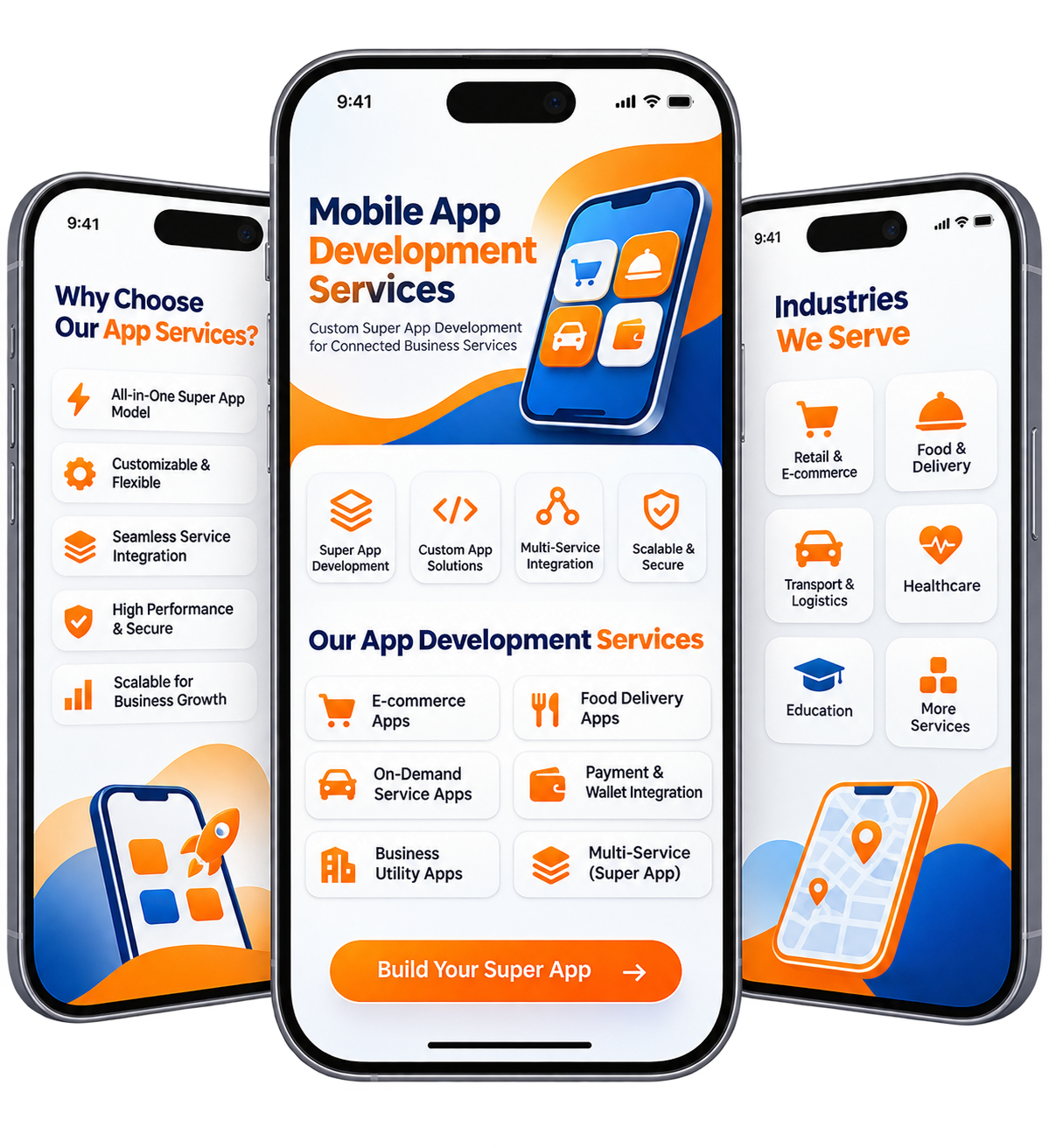
Super app development involves creating a mobile application that brings multiple related services or digital functions together within one platform. Instead of requiring separate applications for every task, users can access connected services through a shared interface, while the underlying systems manage individual functions, data, and integrations.
A super app may contain distinct service modules while sharing selected components such as authentication, navigation, notifications, and account management. Its structure depends on the business model, user requirements, and technical architecture.
Bring several relevant services into one mobile experience, allowing users to access different functions without switching between standalone apps.
Create a consistent entry point for sign-in, profiles, permissions, and navigation across supported services.
Connect relevant modules with backend systems so information can support related processes and reduce unnecessary duplication.
Organise individual functions into maintainable components that can be updated or extended according to business requirements.
A super app can make sense when several services share users, workflows, or business objectives.
Link related tasks within one application so users can move between services through a consistent journey.
Provide a common entry point for shopping, bookings, payments, support, or other relevant business functions.
Reuse suitable navigation patterns, account features, and interface conventions across different service modules.
Introduce additional modules as requirements evolve, provided the architecture, infrastructure, and integrations support expansion.
Each component has a defined role in connecting services, managing user activity, and supporting application operations.
Structure individual services around their own screens, workflows, and business logic where the architecture supports modular development.
Manage authentication, account details, preferences, and permissions across relevant parts of the application.
Integrate suitable payment services to support transactions, payment confirmations, and related business processes.
Help users locate relevant services through search, categories, filters, and appropriate recommendations.
Deliver service updates, confirmations, reminders, and messages through suitable in-app or device notification channels.
Connect service modules with databases, external platforms, and backend systems to exchange information and process requests.
Support service configuration, operational management, activity reporting, and performance analysis through appropriate administrative tools.
From initial planning to ongoing improvements, we help define and build the components your super app requires.
Define business objectives, intended users, service relationships, essential features, and technical requirements before development begins.
Explore Service →Plan navigation, service discovery, user journeys, and individual module interfaces within a consistent application experience.
Explore Service →Build the application foundation and service modules around an architecture suited to current requirements and planned expansion.
Explore Service →Connect relevant external platforms, business software, and APIs according to their technical capabilities and access requirements.
Explore Service →Integrate suitable payment providers and transaction workflows, including payment status handling and user-facing confirmations.
Explore Service →Assess an existing application or digital platform to identify practical opportunities for consolidating suitable services.
Explore Service →Maintain the application through agreed bug fixes, compatibility updates, performance improvements, and planned feature enhancements.
Explore Service →A structured development process helps define the scope, validate the architecture, and organise delivery from planning through release.
Identify business goals, target users, existing systems, intended services, and the problems the application needs to address. Establish the initial scope and identify important technical dependencies.
Prioritise essential features, map service relationships, define the application structure, and select an appropriate development approach. Separate launch requirements from features that can be introduced later.
Plan user journeys, shared navigation, module-level screens, and interactions. Define how application components, backend services, data flows, and integrations should work together.
Develop the application foundation and implement the required service modules. Integrate suitable APIs, databases, authentication services, payment systems, and other dependencies according to the agreed scope.
Validate core workflows, integration behaviour, access permissions, error handling, and compatibility across the intended devices and platforms. Address identified issues before preparing the release.
Prepare the application for deployment and the relevant platform submission requirements. Plan post-launch maintenance and improvements through an agreed support arrangement.
Super apps are particularly relevant to industries where customers use several related services within the same digital ecosystem.
Combine product discovery, shopping, order tracking, customer accounts, loyalty features, and support within one retail application.
Bring eligible financial services, payment functions, account interfaces, and transaction history together, subject to provider integrations and applicable requirements.
Connect travel discovery, reservations, itinerary management, booking updates, and customer support within a shared application experience.
Bring ride booking, transport information, trip status, location-based features, and payment workflows together where the service model supports them.
Connect restaurant or product discovery, ordering, payment, delivery tracking, and customer communication within one platform.
Provide a central access point for account management, plan selection, service requests, bill payments, and additional digital offerings.
Discuss your service ecosystem with our team to define priorities, integrations, and the right development approach.
Plan Your Super AppA multi-service application needs considered integration planning, appropriate security controls, and an architecture that supports reliable operation and future changes.
Connect services through supported APIs and integrations. Implementation depends on external platform capabilities, available documentation, access permissions, and each connected system's requirements.
Plan authentication, account permissions, and data handling around the application's users and workflows. Security controls should reflect the data involved, system architecture, and applicable requirements.
Organise functionality into suitable components so individual services can be maintained without unnecessarily affecting unrelated parts of the application.
Consider application responsiveness, backend dependencies, monitoring, and expected usage. Additional services and increased workloads should be planned around infrastructure capacity and operational requirements.
Discuss your business goals with our team to clarify scope, architecture, and development priorities.
We typically reply within minutes
