Build a mobile application around your business goals, customer needs, and daily workflows. Codexxa develops custom Android, iOS, and cross-platform apps with purposeful interfaces, practical features, and integrations designed for your requirements.
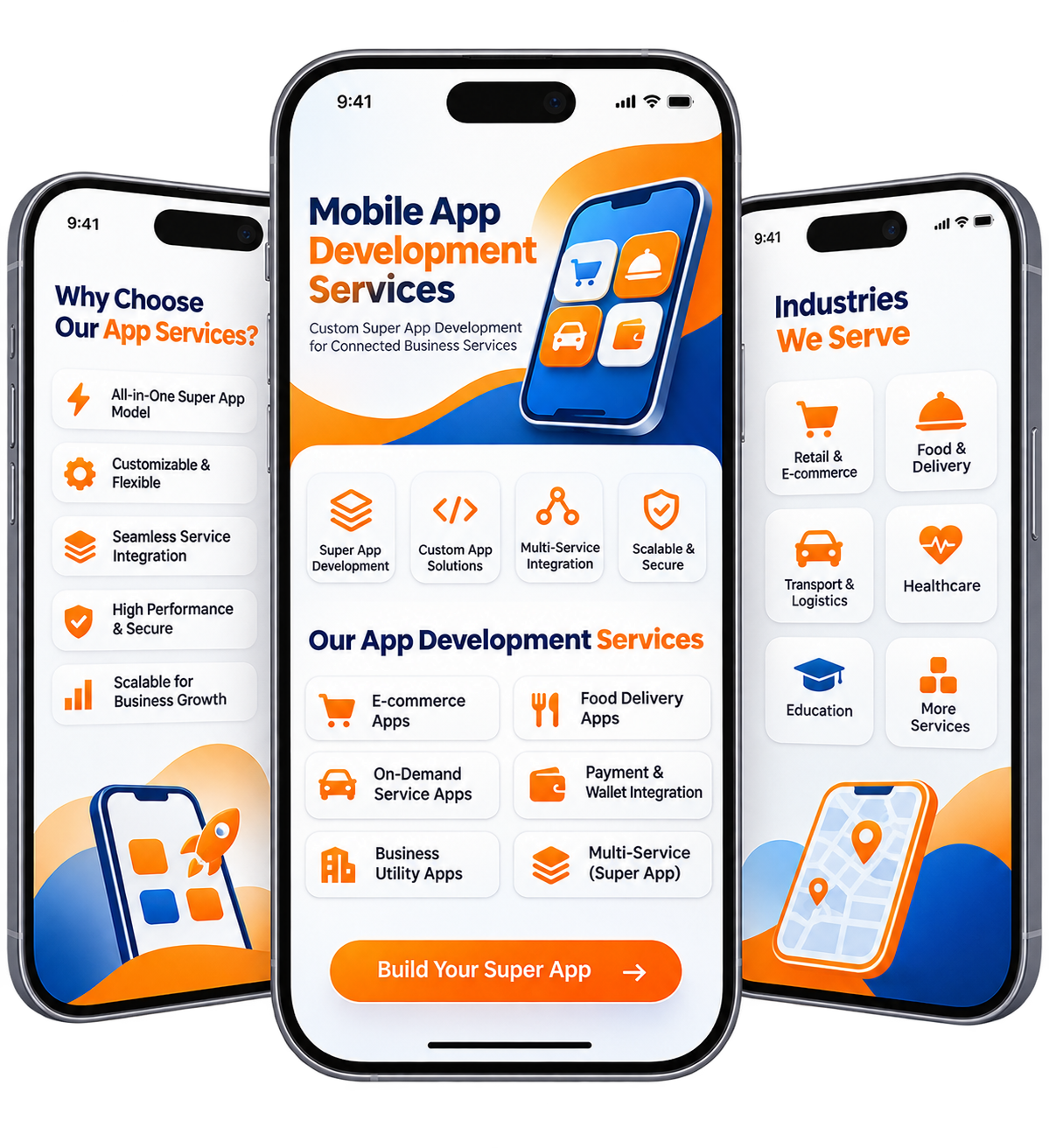
Share your app idea with our team to discuss its scope, platforms, features, and technical requirements.
Mobile app development involves planning, designing, building, testing, and maintaining applications for smartphones and other mobile devices. It combines user interfaces, application logic, data handling, and device capabilities to support specific user needs and business operations.
Designs the screens, navigation, layouts, and interactions users rely on to complete tasks easily and consistently.
Defines how the app processes information, applies business rules, manages user inputs, and communicates with backend systems.
Connects the application with databases, payment services, customer platforms, and other systems through suitable APIs and integrations.
Uses relevant device features such as cameras, location services, push notifications, and biometric authentication, subject to platform permissions and requirements.
We align the application's structure, features, and technology with your business objectives and intended users.
Identify the problem the app should solve, who will use it, and what those users need to accomplish.
Evaluate native Android, native iOS, Flutter, React Native, or suitable web-based approaches against your requirements.
Separate essential launch features from future enhancements to keep development focused on practical business outcomes.
Map data flows, backend requirements, third-party services, user permissions, and connections with existing systems.
Plan a maintainable application structure that can accommodate evolving features and changing requirements.
Each stage moves the application from a defined concept towards a tested, deployable product.
Establish project objectives, target users, core features, platform requirements, dependencies, and delivery priorities.
Develop user journeys, screen layouts, navigation patterns, and interface designs around the intended experience.
Build application components, implement business logic, connect APIs, and configure required backend services.
Test key workflows, device compatibility, integration behaviour, usability, and error handling to identify issues before release.
Prepare release builds, deployment configurations, and required store submissions.
Address identified issues, review performance, and plan updates or enhancements based on evolving needs.
Choose an approach that matches your product, preferred platforms, existing systems, and planned app functionality.
Combine multiple services and user journeys within one application, where a unified platform suits your business model.
Explore Service →Build cross-platform applications using Flutter and Dart, with a shared codebase for supported target platforms.
Explore Service →Develop cross-platform mobile applications using React Native, with native integrations where project requirements call for them.
Explore Service →Create Android applications tailored to your target devices, user workflows, platform capabilities, and backend requirements.
Explore Service →Build applications for Apple devices with interfaces, integrations, and functionality suited to the iOS ecosystem.
Explore Service →Package a suitable existing web application for app-like distribution, subject to technical feasibility and platform policies.
Explore Service →Develop mobile shopping experiences with product discovery, cart management, checkout, payment integrations, and order tracking.
Explore Service →Maintain existing applications through bug fixes, compatibility updates, performance improvements, and planned feature enhancements.
Explore Service →We define features around the tasks users need to complete and the outcomes your business expects.
Create intuitive navigation, consistent layouts, clear interactions, and accessible screens that support essential user journeys.
Support registration, sign-in, profile management, authentication, and role-based access where required.
Deliver relevant content, account updates, reminders, and push notifications based on user preferences and permitted data.
Help users find products, services, records, or content through search, filtering, sorting, and category navigation.
Connect suitable payment gateways to support checkout, transaction processing, payment status updates, and related workflows.
Use supported device capabilities such as GPS, cameras, file access, and biometrics when they serve a clear purpose.
Allow selected information or tasks to remain accessible offline, with synchronisation designed around the app's data requirements.
Track relevant events and app usage to help teams understand engagement, workflow completion, and areas for improvement.
Support customer accounts, service discovery, bookings, communication, and ongoing engagement through mobile experiences.
Give teams access to internal workflows, operational information, approvals, and business tools from supported devices.
Connect customers, service providers, and administrators through booking, assignment, status updates, and service tracking.
Support product browsing, seller or product listings, checkout, order management, and customer notifications.
Organise membership access, user interactions, content delivery, subscriptions, and account-related features.
Bring mobile interfaces together with backend systems, external APIs, connected devices, or existing business software where required.
Discuss your app concept with our team to define suitable platforms, essential features, and integrations.
Plan Your Mobile AppA mobile application's reliability depends on its system connections, data handling, and ability to adapt to changing requirements.
Connect applications with suitable APIs, databases, CRM or ERP platforms, payment gateways, communication tools, and other business services. Integration scope depends on system access, compatibility, and provider capabilities.
Consider authentication, permissions, secure data handling, input validation, error management, and compatibility testing throughout development.
Plan for bug fixes, operating system compatibility, dependency updates, performance improvements, and new features through an agreed maintenance arrangement.
Mobile app development can include requirement analysis, UX/UI design, application development, API integrations, testing, deployment preparation, and ongoing maintenance. The exact scope depends on your product and project requirements.
Native development can suit applications requiring platform-specific capabilities or deeper integration. Cross-platform approaches can share code across supported platforms.
Yes. The development approach can target Android and iOS through native development or a suitable cross-platform framework, depending on the application's requirements.
Yes, where the existing systems provide suitable access and integration options. Feasibility depends on APIs, permissions, technical compatibility, and the capabilities of each system.
Some websites or progressive web applications can be packaged or adapted for app-like experiences. Suitability depends on the website's architecture and required device features.
Depending on the use case, features can include user accounts, search, notifications, payments, location services, analytics, offline access, and integrations with existing business systems.
Timelines depend on feature complexity, design requirements, integrations, platform coverage, testing, and approval processes.
Costs vary with application complexity, platform choices, design, integrations, backend requirements, and ongoing support.
Post-launch support can be planned around bug fixes, compatibility updates, monitoring, and feature enhancements based on the agreed support plan.
Discuss your app idea with our team to clarify platforms, features, and next steps.
We typically reply within minutes